
- Reassure the casualty
- Encourage them to self-maintain their neck in a comfortable, stable position
- Never force an uncooperative person into any position, as this may exacerbate an injury.
- Call 999 or 112 for emergency help or ask someone else to call for you
- Monitor their airway, breathing and level of response while waiting for help to arrive
(29824) *Suspected Spinal Injury* Universal 2026
When to suspect a spinal injury
Think about how the injury happened — the mechanism of injury can tell you a lot.
If there’s any doubt, treat as if a spinal injury is present.
Suspect a spinal injury if the casualty:
 Had a blow to the head, especially the back of the head
 Was knocked unconscious, even for a short period
 Fell from a height, for example, from a horse, roof or ladder
 Dived into water
 Was in a high-speed collision or accident
 Was involved in a crush by machinery or a heavy object or a collapse, such as a rugby scrum
Signs and symptoms
 Severe pain in the neck or back
 Unable or unwilling to move their neck
 Weakness, numbness, or paralysis in any part of the body
 Loss of bladder or bowel control
 Twisted or abnormal position of the neck or back
 Difficulty breathing or shortness of breath
- Kneel behind their head and immobilise their head and neck using the head or trapezius squeeze technique to maintain a neutral in-line position.
- If you need to open their airway, use the jaw-thrust technique, if trained to do so. If this does not open the airway succesfully, use the head tilt, chin lift technique. Remember that an open airway takes priority over a possible spinal injury.
- Call 999 or 112 for emergency help or ask someone else to call for you
- Monitor their airway, breathing and level of response while waiting for help to arrive
- Check if their airway is open and hold their neck in a stable position
- Kneel behind their head and immobilise their head and neck using the head or trapezius squeeze technique to maintain a neutral in-line position.
- If you need to open their airway, ask others to help you carefully roll them as a unit onto their back, while keeping their neck in line with their body and as stable as possible.
- Then apply the head or trapezius squeeze.
- Call 999 or 112 for emergency help or ask someone else to call for you
- Monitor their airway, breathing and level of response while waiting for help to arrive
- If you have specialised training, for example, lifeguard or mountain rescue, consider the selective use of spinal motion restriction devices and collars in line with existing protocols.
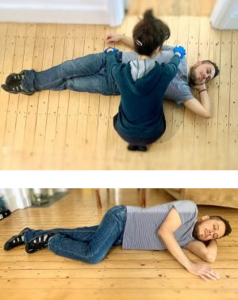 If the casualty vomits, you cannot keep their airway open, or you have to leave them to get help, you will need to put them in the recovery position. If you are alone and need to turn the casualty
- Kneel at the side of the casualty
- Cross their legs, bringing the far leg towards you
- Gently slide the casualty’s nearest hand under their head with their palm facing upwards – take care not to move the head any more than necessary
- Grasp their far shoulder and hip
- Pull with equal strength on the shoulder and hip to roll the casualty towards you on to their side
- Bring the crossed leg towards you so that the hip and knee are at right angles
- Monitor breathing until professional help arrives. Keep the casualty warm

