
(27695) *Burns and Scalds – Treatment 2025 REPLACES 7430 – Should we move last two boxes to separate page?
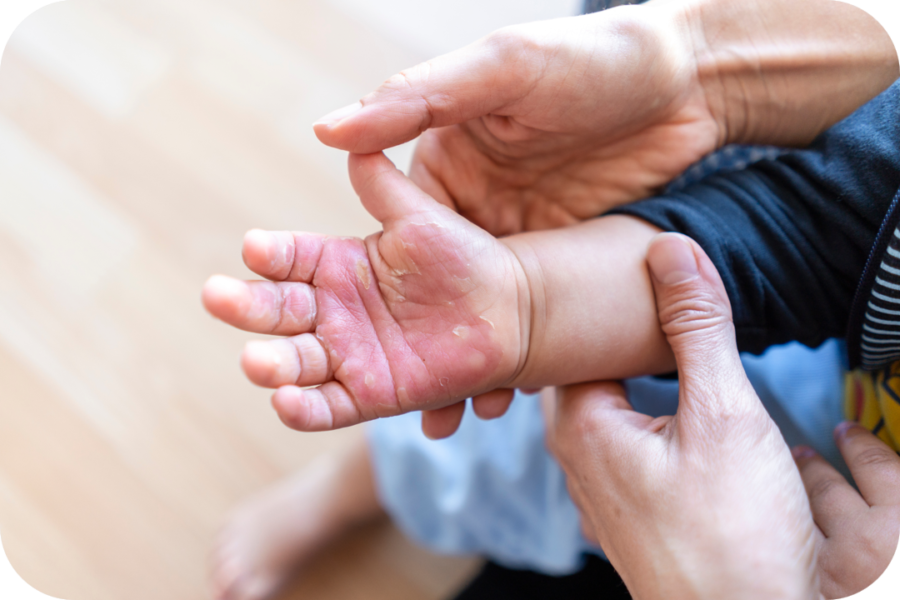
Signs of burns and scalds
The signs will vary depending on how serious the burn or scald is, and may include:
- Red skin
- Peeling skin
- Blisters
- Swelling
- White or charred skin
NOTE: The amount of pain is not always related to how serious the burn is. Full-thickness burns are often not painful because the nerves that sense pain have been destroyed.
Treating burns and scalds
- Immediately move the child away from the heat source to stop the burning
- Remove any nappies, clothing, or jewellery that is near the burnt area of skin, but do not move anything that is stuck to the skin
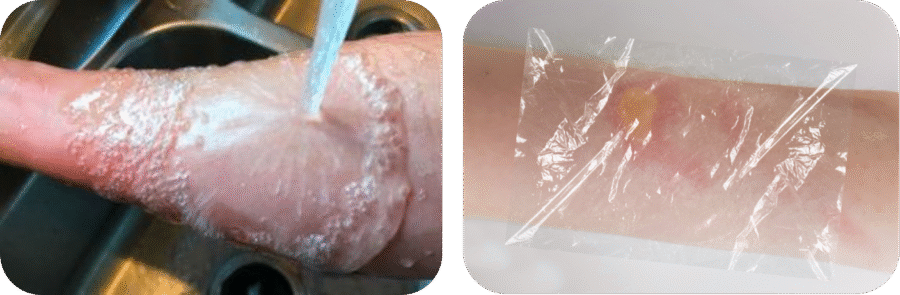
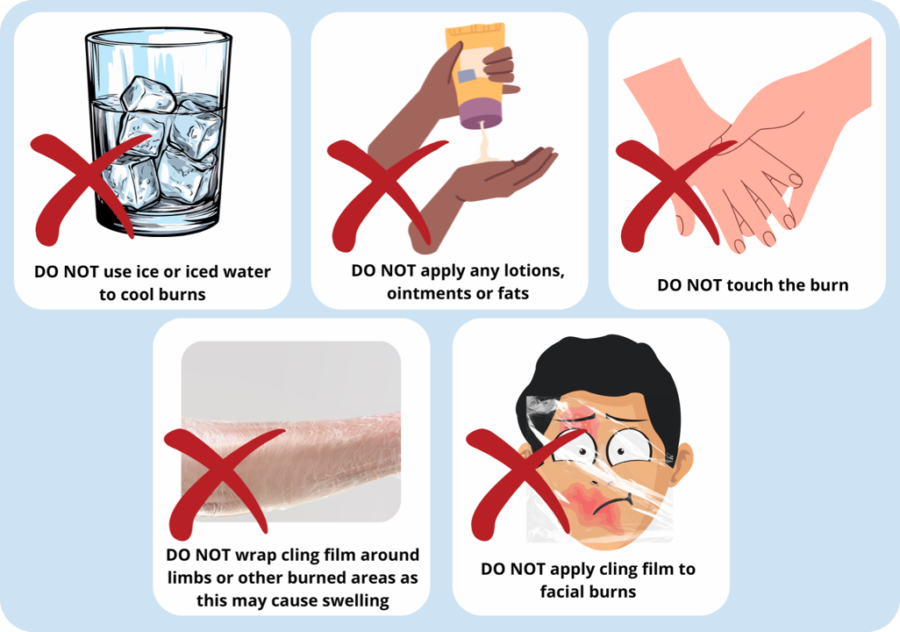
- Cool the burn or scald with cool or lukewarm water for 20 minutes, as soon as possible. The quicker the burn is cooled the better the outcome, however, if there is a delay still attempt cooling for up to 3 hours post injury.
- If the skin has blistered or has blisters that have ruptured, cover the cooled burn or scald with loose strips of cling film placed lengthways and seek advice from a healthcare professional. If cling film is not available a clean plastic bag or damp cotton cloth could be used.
- Keep the child warm to prevent hypothermia
- Do not burst any blisters that form
Other points to note:
If you have prior written permission from the child’s parent or guardian to give medication, you can relieve a high temperature and pain using over the counter medicine such as suspension paracetamol.
NOTE: If the supply of running water (or other harmless liquid) is limited, apply a cool water compress using any clean, wetted, lint-free cloth, such as a wet tea towel.
If no liquid is available in any form, cover burns with cling film and cool at the first available opportunity.
If it's an acid or chemical burn:
- Dial 999, whilst protecting yourself (use gloves if available)
- Carefully try to remove affected clothing and rinse off with available water
- Continue to irrigate with running water while awaiting assistance if available
When to get medical attention
More serious burns will require professional medical attention.
Children are at greater risk of complications following a burn, and current advice is that all children under 10 years should get medical attention after a burn or scald.
This could be from a pharmacist or GP surgery, however you should go to hospital A&E or an Urgent Care service for:
- All chemical and electrical burns
- Large or deep burns - a large burn is any burn bigger than the size of the injured person’s hand.
- Burns of all sizes that have caused white or charred skin
- A burn that goes all the way round an arm or leg
- Burns on the face, hands, arms, feet, legs or genitals that have caused blisters
 The SCALD acronym may help you remember what to consider when assessing a burn injury.
Important:
If the child has breathed in smoke or fumes, they should also have medical attention.
Some symptoms may be delayed and can include:
- Coughing
- A sore throat
- Difficulty breathing
- Facial burns
Click here to read more about burns treatment from the British Burn Association