
(30161) *Treatment of Life-threatening Bleeding – Wound Packing* NEW 2026 replaces (24287)
First Steps
- Ensure scene safety
- Call 999 for an ambulance
- Put on PPE where available
Wound Packing or Tourniquet?
Tourniquets are only appropriate for use on the arm or leg.
Wound packing is used for life-threatening bleeding in areas where a tourniquet cannot be applied
Haemostatic dressings
If a wound is deep and bloody and bleeding cannot be stopped with direct pressure, you need to pack it - ideally with a haemostatic dressing.
These dressings are treated with an agent or chemical that assists with the formation of blood clots and will stop the bleeding more quickly.
If you don't have a haemostatic dressing, use any bandages, gauze, or clean cloth available.
Note: Only pack wounds where it is safe to do so, for example, deep bleeding in the groin, armpit, or buttock.
Do not pack chest wounds, abdominal wounds with exposed organs, the airway/mouth, eyes, or open skull wounds.
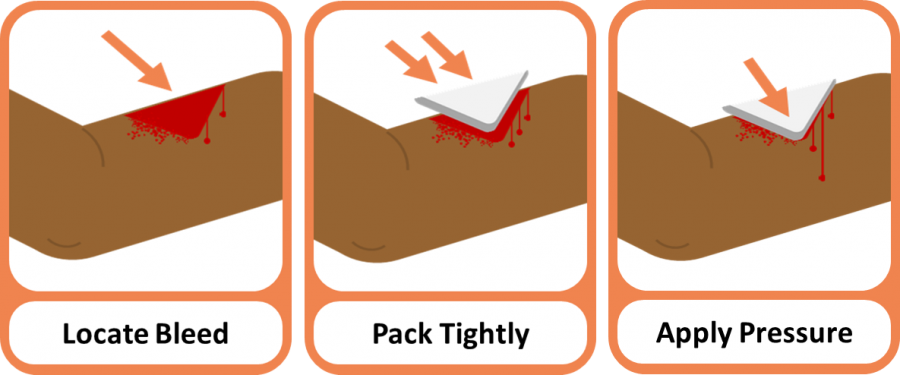
Wound packing - step by step
- Expose the wound fully. Cut or move any clothing as needed
- Apply initial direct pressure. Place your gloved fingers — with or without a dressing — into the wound to apply initial pressure to the exact point of bleeding. Mop away excess blood to locate the source of the bleeding, if necessary
- Pack the wound firmly and deeply. Tightly pack the wound with a haemostatic dressing, bandages, or other clean cloth. Feed the material into the cavity as deep as possible, directly onto the bleeding point. Continue packing until the cavity is full.
- Apply very firm pressure over the packed wound with both hands directly on top of the bleeding wound for at least 5 minutes and then until bleeding is clearly controlled
- Apply a pressure dressing to secure the pack.
- Monitor the casualty and treat for shock. Keep them warm, lying flat and reassure them.
- Handover to ambulance crew. State clearly the type of dressing used and when you applied pressure.