
Paediatric Assessment – The BBB Triage Tool (29935) 2026
Paediatric Cardiac Arrest
In adults, cardiac arrest usually happens suddenly because of a primary heart problem, like a heart attack. When this occurs, the person often collapses immediately, as the heart can no longer pump blood to the brain.
*In children, however, cardiac arrest is usually the final stage of a gradual loss of oxygen, often caused by an airway blockage, breathing difficulty, shock, or a neurological emergency. Because of this, sudden collapse is rarely the first sign of cardiac arrest in children.
This means that spotting early warning signs is vital. Being able to assess an unwell child, recognise when they are deteriorating, and call for help promptly is the best way to prevent cardiac arrest in infants and children.
The BBB Triage Tool
The BBB Triangle is a simple and effective triage tool to help you quickly identify a seriously unwell infant or child.
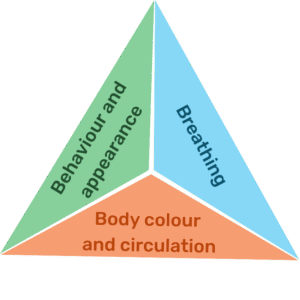
Behaviour and appearance
Be alert to signs that may indicate a child is seriously unwell:
- are they fully alert or difficult to rouse?
- have they become floppy or rigid?
- are they agitated or confused?
- are they more irritable than usual?
- are they crying inconsolably?
- are they complaining of pain that is not settling with gentle pain relief?
- are they interacting normally?
- do they still want to do normal things like eat, drink and play?
Breathing
Look and listen to their breathing:
- are they making abnormal sounds?
- are they gasping for breath?
- are they breathing more quickly or slowly than usual?
- is their breathing regular?
- are they working harder than usual to breathe? Signs include use of chest and tummy muscles, and flaring of nostrils
- are they adopting an abnormal position to help them breathe more easily?
Body colour and circulation
Body colour can give important clues about how well oxygen and blood are circulating around the body:
- is the skin abnormally pale, ashen or grey?
- in darker skin tones, look at the skin inside the lips or the palms of the hands
- is the skin mottled or tinged blue?
- are there any obvious signs of bleeding?
* Although uncommon, children can experience a sudden cardiac arrest. When it does occur, it is often related to an underlying heart condition and may be triggered by physical activity or sports.