Primary Survey: Circulation, Disability and Exposure -2026 (30333) replace with 31800

Circulation and Bleeding
Circulation is the movement of blood around the body. It is driven by the heart and travels through the blood vessels to deliver oxygen and nutrients to all organs.
If circulation is disrupted, for example, by severe bleeding or a problem with the heart, the body may not get enough oxygen. This can quickly become life-threatening.
At this step you need to check and treat:
- Severe external bleeding
- Signs the heart isn’t working properly, such as chest pain, pale or sweaty skin, or feeling faint.

Disability (level of response)
Disability in DRS ABCDE is a quick check of how well the brain is working. Changes in a person's responsiveness can be an early sign of a serious problem, such as a lack of oxygen, low blood sugar, a head injury, or a worsening medical condition.
Spotting these changes early helps you decide what to do next and whether urgent help is needed.
A simple way to assess this is the ACVPU scale:
A – Alert: They are awake, aware, talking and responding normally.
C - Confused: They are talking but are not fully orientated. Find out if this is a new onset of confusion
V – Voice: They react when you speak to them, for example, by opening their eyes or moving.
P – Pain: They only respond to a painful stimulus, such as gently squeezing their shoulder.
U – Unresponsive: They do not respond to voice or pain at all.

Exposure and Environment
This step means gently uncovering or removing clothing, only as much as needed, to check for anything you might have missed that could be life-threatening.
This includes: hidden bleeding, rashes, burns or injuries. Look for medical alert jewellery, medications, or clues to their condition.
It also means thinking about environmental risks such as cold or heat exposure, wet conditions, or other hazards.
During this step, remember to protect the person’s dignity, keep them warm or cool as appropriate to avoid hypothermia or overheating.
Repeating ABCDE
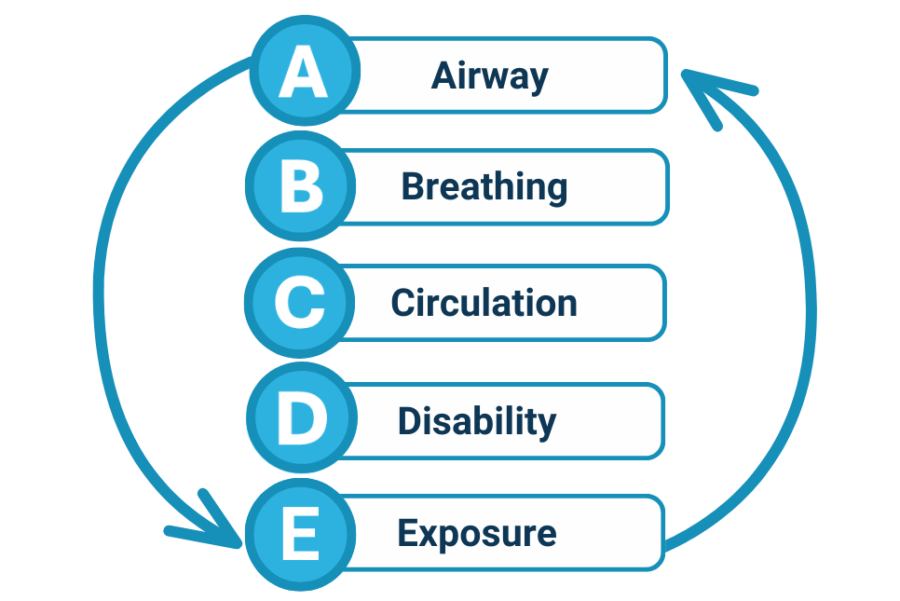
Think of ABCDE as a loop, not a straight line.
While waiting for professional medical help to arrive, you keep checking, treating, and re-checking because any new airway, breathing, or circulation problem can become life-threatening very fast.