
(30133) *Primary Survey: Airway and Breathing* – New Lesson 2026

 Airway
The airway allows air to travel in and out of the lungs. It includes the mouth, nose, throat, and the windpipe (trachea).
If the airway is closed or blocked for any reason, the casualty may not get enough oxygen, which can quickly become life-threatening.
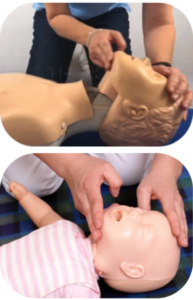
How to open the airway
- Lay the casualty on their back if you can do so safely.
- Place one hand on the forehead, lift the chin by placing 2 fingers under the bony part of the chin. Gently tilt the head back.

Breathing
- Look, listen and feel for normal breathing for up to 10 seconds.
- If they are not breathing normally, you need to start CPR immediately.
- If they are breathing normally, you will move on to step C in the ABCDE process.
NOTE: When someone collapses, they often make noises that sound like breathing, such as panting, occasional gasps, known as agonal gasps, or infrequent noisy breaths. These are NOT signs of normal breathing and can be a sign of cardiac arrest. If you are unsure, start CPR.
The tongue lifts away from the back of the throat, so it no longer blocks air from getting in. Air can move more easily into the lungs if nothing is blocking the airway. When the airway is clear, opening it helps oxygen reach the body and brain, which is essential for survival.
- Anaphylaxis (severe allergic reaction causing swelling of the airway)
- Cardiac arrest (loss of muscle tone can let the tongue fall back and block the airway)
- Choking (object stuck in the throat)
- Severe asthma attack (airways tighten and narrow)
- Head injury or unconsciousness (relaxed airway muscles can cause blockage)