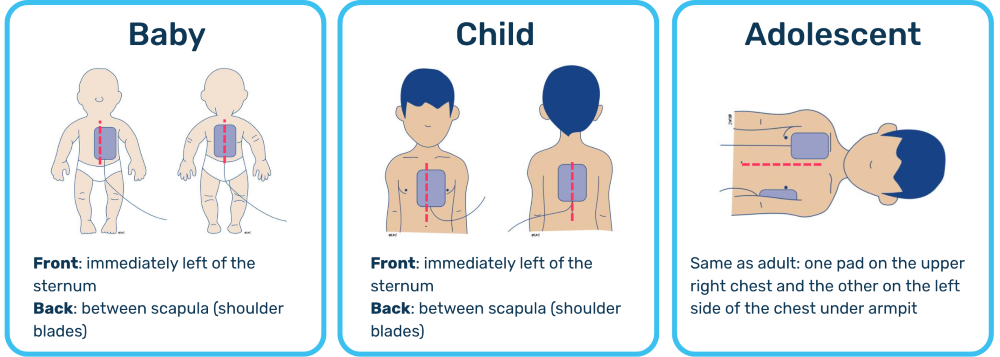
-
- Paediatric pads – suitable for children under 8 years old or weighing less than 25 kg, or
- A paediatric mode or setting – which automatically reduces the energy of the shock.
**Paediatric CPR and Use of AED 2026 (29810) replaces (10706) SAMANTHA ADD IMAGES AND NEW CHILD VIDEO
Paediatric CPR
It’s uncommon for a child to need CPR, but when it does happen, it’s usually because of breathing problems (respiratory failure) rather than a heart issue.
For that reason, it’s especially important to provide both rescue breaths and chest compressions during CPR to help restore oxygen and circulation effectively.
For casualties aged up to 18, start CPR with 5 rescue breaths before giving chest compressions.
Give 30 chest compressions unless you have been formally trained in the classroom to give 15 compressions.
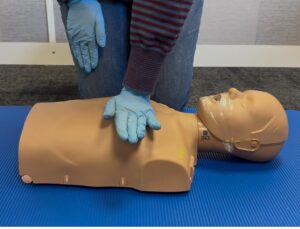
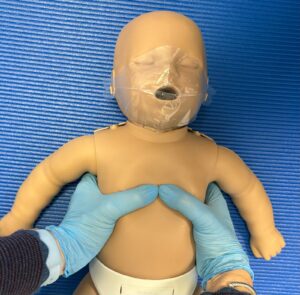
Paediatric chest compressions
Depending on the size of the casualty and your own strength, use the one-hand or two hand technique in children older than 1 year.
In infants under 1 year, use the two-thumb-encircling technique.
If you are unable to give high-quality chest compressions with your thumbs, use the one-hand technique.
All AEDs are designed for adults, but they can also be used safely on children.
Depending on the model, the AED may have: